YAOUNDÉ, CAMEROON — During the Wycliffe Global Alliance Africa Area Gathering, a question was put before delegates: Is the African Church awake?
A three-person panel, moderated by Dr. Zac Manyim, Director of the Department of Church and Scripture Engagement at CABTAL (Cameroon Association for Bible Translation and Literacy), delved into the continent’s strategic mission challenges and local breakthroughs.
A Call from the Pulpit to Action
‘Yes, the African Church is awake, but it is not active,’ said Rev. Abel Chebe Ngah of the Apostolic Church in Cameroon. He noted a disparity in how modern ministry resources are being spent.
‘Some churches are focused on building megachurches, while only a few are focused on spreading the Word of God. The African church should have been doing exploits, but it is not yet doing so. There are still many areas in Africa not reached by the gospel.’
For the landscape to shift, Ngah argued that mission cannot be treated lightly; the local church must intentionally send missionaries. Demonstrating local ownership, his own denomination dedicates a specific Sunday every year entirely to Bible translation, using it to mobilise believers and raise financial support for CABTAL’s fieldwork.

The Lifelong Impact of Mother-Tongue Literacy
Pastor Alphonse Gamaldak, president of the Mofu Gudur Inter-Church Committee, said Bible translation reshaped his entire life trajectory. Before receiving any formal education, he learned to read and write in his mother tongue. This linguistic foundation gave him the leeway to master French, eventually leading him to seminary.
‘Yes, the church is awake in Mofu Gudur (a language community of northern Cameroon) because many kids have now grown and seen their lives transformed by the Bible translated into our language,’ he said.
The impact extends far beyond the sanctuary. Through mother-tongue functional literacy programmes overseen by the translation project, community members have developed income-generating activities, drastically improving local livelihoods. Today, over 250 literacy teachers are actively instructing inside churches and surrounding villages.
Yet, Pastor Gamaldak warned that sustainability requires ongoing investment. ‘There is still much to do,’ he said, ‘like continuing to build the capacity of and support these 250 literacy teachers.’
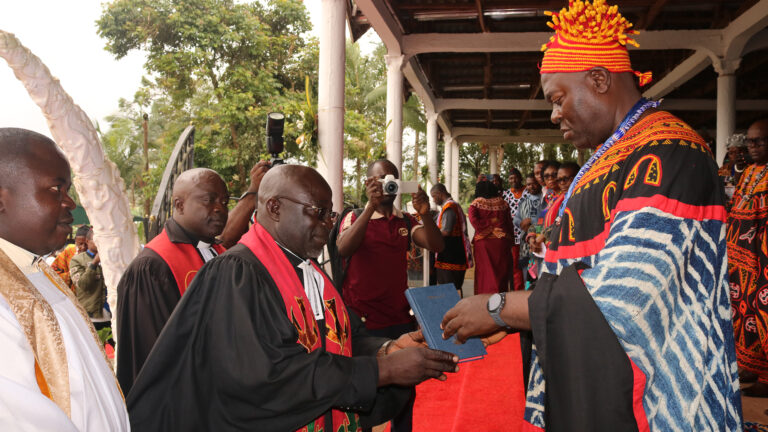
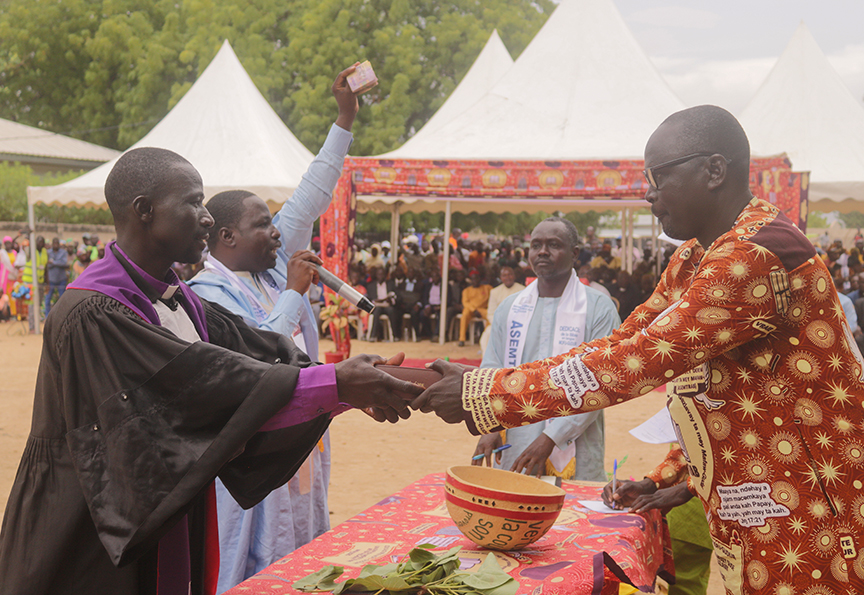
In 2008, when the Mofu Gudur New Testament was dedicated, the church and the community came together to facilitate the distribution. Five thousand copies were printed, and they were all sold out in the following months. A second run of 4,000 copies was printed. A few years later, it was still hard to obtain a copy. This motivated CABTAL to begin work on the Old Testament, which was dedicated in May 2026.
The Takeaway for the Global Alliance
For both the African and global audiences at the Yaoundé gathering, panel members underscored a fundamental truth: Bible translation is not an isolated academic exercise. When local churches move from being merely ‘awake’ to being actively engaged, Scripture access unlocks deep spiritual maturity, local resource mobilisation and holistic community development.
Story and Photos: Isaac Forchie