Yaoundé, Cameroon — The landscape of global Bible translation is undergoing a paradigm shift, moving away from traditional, agency-led book printing and toward multimodal translations driven by local communities.
At a June 2026 gathering in Yaoundé, translation partners and members of Wycliffe Global Alliance organisations spanning Africa, Europe and Latin America reflected on how Scripture is delivered in the 21st century. Their consensus: The ultimate metric of success is no longer just the distribution of physical books, but measurable transformation of lives through deep, culturally authentic understanding.
Community-led translation
Dr. Paul Kimbi, the Alliance’s Consultant for Bible Translation Programmes, said Bible translation’s future belongs to community dialogue rather than isolated translation agencies. This emerging approach, known as conversational translation, prioritises localised, grassroots work: listening intimately to communities, engaging them in active storytelling and using locally adapted communication channels.
As multiple translation agencies increasingly operate within the same borders, global leaders are urging a shift toward radical collaboration.
‘The multiplicity of agencies is not a hindrance; however, harmony and unity are essential,’ Kimbi said. ‘Unity does not mean uniformity. Each agency, according to its unique strengths, approaches Bible translation as a collaborative piece of God’s global mission.’

Beyond the Book: Multimodal and AI Integration
Because cultural contexts vary wildly across the globe, the Alliance’s Africa Area gathering highlighted the urgent need for ‘embodied and multimodal’ translations. This means managing multiple streams of communication simultaneously—integrating oral storytelling, vibrant illustrations, written text and digital media.
‘We do not communicate only with words; we communicate with colours, images, and multimedia,’ Kimbi said. ‘We can no longer consider translation strictly as a written book, but rather as a dynamic multimodal experience.’
This digital evolution naturally intersects with the rise of artificial intelligence. While delegates recognised AI’s immense potential to increase translation speed, optimise efficiency and lower operational costs for minority languages, attendees maintained a stance of strategic caution.
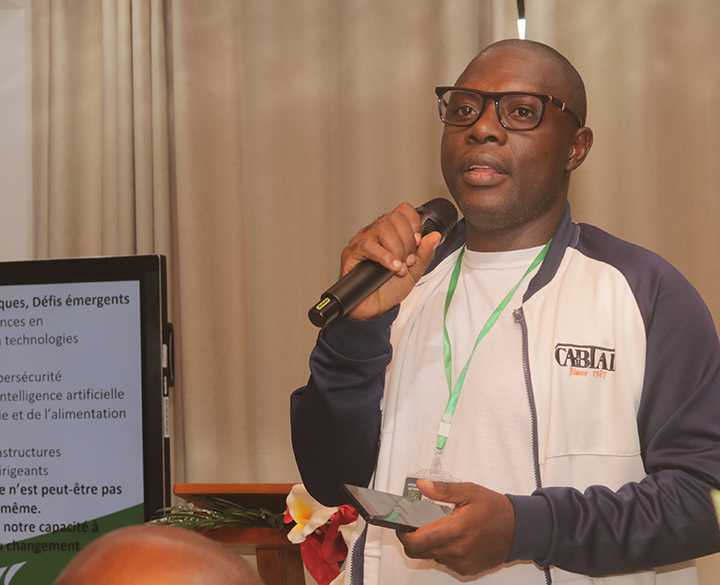
‘Technology accelerates the advancement of Bible translation and language development, but it also creates new strategic responsibilities for leaders and organisations,’ said Etienne Ondoa, a language technology consultant.
Staff capacity building, therefore, remains the greatest investment, he said. As technology evolves, the skills required to support it in ministry also evolve.
‘Technological leadership should have a voice in strategic decision-making processes, Ondoa said. ‘Technological decisions increasingly influence ministry outcomes, sound financial resource management, cybersecurity, AI adoption and organisational resilience.’
A Symphony for the Global Church
Ultimately, leaders at the event reaffirmed that translation organisations do not operate in a vacuum. They exist to serve the church, which remains God’s primary vehicle for global mission. Kimbi likened the future of the movement to a grand, global arrangement.
‘The particularity of modern Bible translation is that it is a diverse ensemble—an orchestra of varied influences interpreting a magnificent symphony titled ‘Scriptures’ for every language community,’ he said.
‘And in this orchestra, we need everyone: local churches, oral communicators, media creators, literacy specialists and technology partners.’
Story: Lune Prudence Mvondo and Isaac Forchie
Photos: Isaac Forchie